Clicky

NORTHWEST'S LARGEST SELECTION
(425) 771-5774

What’s Important In a Sauna?

Like hot tubs the sauna buying experience can be overwhelming and confusing. Furthermore, there are few local dealers or retailers that stock and display saunas which makes it even more difficult because you can’t see them in person to compare features and quality differences. With over 30 years of dealership experience in the sauna business and having sold many types (traditional & infrared) and brands we’ve taken the time to create what we feel is a comprehensive and unbiased guide for understanding saunas.

This guide will go over 9 factors or common denominators amongst saunas that will help you distinguish the good from the bad.

  1. Traditional Saunas (rock & water) versus Infrared Saunas– Traditional saunas have been used throughout history for wellness and relaxation purposes. Traditional saunas use the concept of steam (water poured over hot rocks) to heat a small contained area to extremely high temperatures (150+ degrees). This concept, although still held in high regard by traditionalists, has become obsolete over the last decade due to better technologies (FAR Infrared) that are more efficient and have improved health benefits.

FAR Infrared saunas, sometimes referred to as “FIR”, have become increasingly popular and have eclipsed traditional sauna sales for a variety of reasons. First, they are more efficient. They consume less power (typically run on 110-120v outlets) and heat the sauna more uniformly and consistently. FAR infrared saunas use ceramic or carbon heaters placed strategically in the walls of the sauna to radiate heat throughout the sauna. This keeps the distribution of heat even throughout the sauna leaving no dead spots or cold spots like you would get in a traditional sauna with only one heater placed in a corner of the sauna. Second, FAR infrared saunas heat the body from the inside out rather than the outside in using light energy (heat) from the infrared segment of the electromagnetic spectrum. Studies have shown that FAR infrared saunas use light waves that penetrate the skin 2” inches deep to expel toxins and detoxify the body. Traditional saunas penetrate approx 1/8” of an inch under the skin and the extremely high temperatures can be unsafe and damaging to the body if used for prolonged periods of time. In a FAR infrared sauna, the light energy is absorbed deep under the skin into the subcutaneous tissue where it turns into heat. The heat radiates through the tissues increasing blood flow, improving circulation, and purges toxins and metabolic waste through perspiration. This is done using lower temperatures (120-130 degrees) compared to a traditional sauna (160-180 degrees). Lower temperatures make for a more comfortable sauna experience and longer sessions. Furthermore, there is the concept of resonance which has to do with the FAR infrared rays radiated from the sauna heaters and the body’s own radiant energy being tuned similarly which allows for better detoxification and cellular rejuvenation.

RECOMMENDATION: PURCHASE AN INFRARED SAUNA

  1. Indoor versus Outdoor– Both Indoor and Outdoor saunas are available in traditional or infrared varieties. They are also available as kits or custom built units. Aside from an actual roof structure to protect the sauna from the elements, an outdoor sauna also has four other differences than an indoor sauna;
    1. Hardware – it is important that the screws, buckles, hinges, and any other hardware be a high grade stainless steel or water resistant material to prevent rusting and deterioration.
    2. Wood Paneling – since an outdoor sauna sees much more fluctuation in temperatures it is important that the wood walls and paneling be kiln dried to prevent warping from the extreme temperatures. Furthermore, the walls should also be thicker or heavily insulated to prevent heat loss. Also, some manufacturers stain the outside of the sauna with an all-weather sealant to protect it from the elements. Also many manufacturer’s sell or included an outdoor sauna cover to protect it when not in use.
    3. Electrical – an outdoor sauna will usually fall under different electrical requirements as the wiring and outlet will need to be up to local building codes. The wiring typically needs to be shielded in conduit for protection. Refer to your owner’s manual or dealer for specific installation requirements.
  1. Infrared Carbon versus Ceramic Heaters – Although more expensive, carbon heaters are by far the superior technology when compared to ceramic heaters for a variety of reasons. First, carbon heaters are flat and generally have 10-15 times the heating surface area compared to a ceramic heater. Ceramic heaters are long, skinny tubes or rods that are roughly an inch or less in diameter and therefore have much less heating surface area. Second, a carbon heater has much better and more even distribution of heat because of the large surface area. This design heats the sauna much more consistently and leaves no cold spots. Furthermore, the heater doesn’t burn you to the touch. A ceramic heater has a much hotter surface temperature and is can burn to the touch. This smaller, more concentrated heater can leave cold spots in the sauna and doesn’t heat as consistently. Third, the warming time is faster in a carbon sauna which makes it more convenient to use. Fourth, carbon heating elements are more energy efficient, drawing less power compared to ceramic. Finally, carbon heating elements generally last much longer than ceramic. Carbon elements are rated in excess of 20,000 hours of use compared to 5000 hours for ceramic.

There are some manufacturers that mix the use of these different types of heaters, putting carbon and ceramic heaters in the same sauna, to give a higher perceived value to consumers because the ceramic heaters are less expensive. This is not an ideal design because heat is generated differently and at different rates thereby making the design less optimal. The heaters also have different life expectancies so you’ll have ceramic heaters failing long before the carbon ones.

RECOMMENDATION – PURCHASE A SUANA WITH CARBON HEATERS
Infrared Sauna Seattle

  1. Durability & Construction– Durability and construction is one area that sets sauna manufacturers apart from one another especially with saunas being so prolific on the internet and prices varying so greatly. For this reason alone, we strongly suggest you find local dealers to shop so that you can see and compare quality differences first-hand. Some important considerations when comparing brands are things like;
    1. Glass & Windows – Although glass windows and doors are a nice accent on any sauna they are poor insulators for heat when compared to wood. Glass is also much cheaper than wood and many manufacturers use an excessive amount to keep manufacturing costs down. Furthermore, it is extremely important for safety reason to make sure that the glass used in the sauna is a thicker, tempered glass.
    2. Paneling & Walls – The wood paneling should be tongue and groove design to allow form some expansion and contraction. Also the wood should be kiln dried down to less than 10% moisture content to prevent warping and cracking.

It is important to have double paneled, well insulated walls to ensure faster warm up times, better heat retention, and improved energy efficiency.

    1. # of Heaters & Quality of Heaters – whether you are choosing a carbon heating system or ceramic heating system it is important to have enough heaters in the unit to sufficiently heat the size of room.

There are also different grades of heaters whether ceramic or carbon and this is usually illustrated by the length of warranty given by the manufacturer (the longer the warranty, the better the heater). It is important to make sure that the EMR/EMF (electromagnetic ray) output is extremely low to non-existent as these rays are harmful to the body.

    1. Non Toxic Glues – Toxicity is always a concern in a sauna due to the extremely high operating temperatures. Glue can be a source of toxins. It is important to make sure that that the glues used are water based and non toxic.
    2. Hardware & Hinges – It is important to look at the door hinges, handles, screws, snaps, buckles, or any other hardware on the sauna to ensure they are good quality. The heavier duty the hardware the longer it will last. If the sauna is going outdoors then these components will have to be up to outdoor specifications (ie. stainless steel screws to prevent rusting).
    3. Dual Controls – Look for high quality LED control panels. Also ensure you have a control panel on the outside as well as inside of the unit. Many manufacturers put just one control on the outside to cut cost. This forces the user to have to open the door (let the heat out) and walk out to make adjustments for temperature and time. Furthermore, make sure your controls have a built in digital timer for automatic shut off.

RECOMMENDATION: Less glass, heavy hardware, dual controls, and double paneled tongue and groove wood construction.

  1. Assembly & Installation– Assembly and installation is an important piece of the equation when shopping for a sauna since most buyer’s put the sauna together themselves.
    1. Buckles: Buckle joints are the most widely used assembly hardware in the infrared sauna market today because of the ease of assembly. This is ideal because it provides a strong, secure joint and requires no tools to snap together.
    2. Magnets: Magnet joints are used by few manufacturers in the sauna industry mostly as a way of differentiating from the more widely used buckle design mentioned above. The structural integrity of the magnet assembly system is very poor because the bonds are weak. Leaning too hard against an interior wall or trying to push the sauna is nearly impossible because the joints give and the magnet bonds break making the walls come apart.
    3. Bolts or Screws: Bolt or screw assembly is another less common assembly design, however, it is strong and secure similar to the buckle design. The only negative about bolt or screw assembly is that it takes longer to put together and the threads can also strip if the sauna is taken apart and put back together too many times.

RECOMMENDATION: Purchase a sauna with a buckle assembly design

  1. Types of Wood– There are several possibilities when choosing the wood type in a sauna. Many of them are listed below. There are three major considerations when choosing the wood type. These are the look, the smell, and whether the sauna will go indoors or outdoors as some woods have better mold/mildew resistance and are better for outdoor usage.
    1. Cedar Cedar is a darker colored wood and is the most traditional wood used in building saunas. Cedar is very common in outdoor saunas or traditional saunas (rock & water) because of its natural moisture and mildew resistant properties. Cedar is also known for it’s unique aromatic smell. Cedar is also one of the most expensive wood materials currently on the market.
    2. Hemlock - Hemlock is a lighter colored wood and is considered a hardwood. It has natural mildew and stain resistant properties. It is also the best wood if you have allergies or sensitivity as the natural wood’s aroma isn’t as strong as cedar because it has less resin in it.
    3. Aspen Wood – Aspen is a light colored wood that has almost no odor. Similar to Hemlock this is another good wood if you have allergies or sensitivity to smells.
    4. Basswood – Basswood is light colored and considered a softwood. It has a significant amount of oil/resin in it which gives it natural moisture resistant properties. Basswood is also odorless and a good choice for people with allergies or sensitivities.
    5. Poplar – Poplar is a lighter colored hardwood. It is also considered a hypoallergenic wood.

RECOMMENDATION: WE recommend Hemlock since it is the best all around choice from a hypoallergenic, cost, moisture resistance, and overall aesthetic standpoint

  1. Warranty & Service – Warranties are very important when purchasing a sauna. Most of the premium sauna manufacturers offer a lifetime warranty on their heaters. Warranties can be broken down into heater and construction warranties. Heater warranties being the longest ranging from ninety days to lifetime. Most premium manufacturers offer a lifetime warranty on the carbon heating systems because failure rates are so low. Ceramic heaters can get anywhere from a ninety days on up to a lifetime warranty depending on the brand/quality. The construction warranty is usually against manufacturers defects in the wood walls and hardware that hold the saunas together and can range from one year on up.

It is important to keep in mind that warranties are cost centers for dealers and many of them leave the customer service side of things up to the manufacturer to support and stay out of the loop. We would highly recommend that you make sure that the dealer you purchase your sauna from has local customer service and support in addition to the manufacturers support. Also, be sure to ask your dealer if they charge a travel fee or deductible for a service call and how much. You’ll also want to ask what their labor rates are since sauna warranties typically cover only parts and not labor.

RECOMMENDATION: BUY FROM A SPECIALTY SAUNA DEALER THAT CAN PROVIDE LOCAL WARRANTY AND CUSTOMER SERVICE SUPPORT
Sauna Seattle

  1. Price - Price can be a misconception among many consumers shopping for a sauna. For example, pricing for a particular make and model of sauna can vary from dealer to dealer for the exact same sauna. There are typically two reasons for this variance. First, one dealer may buy better than another dealer because they do more volume and therefore get deeper discounts from the manufacturer. Second, dealers typically determine what they want to sell that sauna for and set their own margins. If a dealer has considerably more overhead than another dealer then they will likely charge more for that same hot tub.

Also pricing can get confusing between brands because not only does the dealers margins come into play there is also a variety of other factors driving price such as the quality of heaters, construction, wood type, and features. These are all things referenced in the points above.

The last point we would like to make about price is to be weary and skeptical of purchasing saunas online or through big box stores like Costco, Walmart, Home Depot, etc. A sauna can be a large investment and something that should be researched in person before purchasing as there are many ways for manufacturers to cut cost (illustrated in points 1-7 above) and buyer’s remorse can be a bigger concern purchasing something sight unseen.

RECOMMENDATION: BUY FROM A SPECIALTY SAUNA DEALER AND AVOID PURCHASING ONLINE OR THRU RETAILERS THAT DON’T HAVE A SHOWROOM

  1. Size & Seating- Choosing size can be a little tricky with a sauna. Aside from a custom built sauna which can be any size or shape, the industry builds some standard footprints such as 3’x3’, 3’x4’, and 4’x5’. These standard footprints come in prefabricated kits that are easy to assemble. There are some in-between sizes that vary from brand to brand and if you are limited on space then it might require additional research and time to find the perfect sauna.

With regard to seating, a 3’x4’ sauna with one bench might fit 2 adults comfortably or a 4’x5’ with a longer bench might fit 3-4 adults comfortably or allow one person to lay down and stretch out.

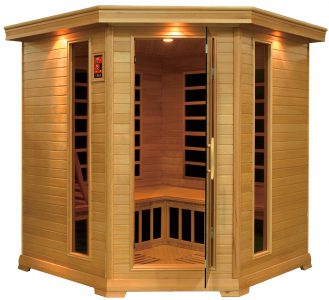
Furthermore, shape can vary as well. The industry builds square, rectangular, round (barrel), and corner shape saunas. It is important that you give some consideration as to where the sauna will go in your home and what size/shape will best meet your needs.

RECOMMENDATION: MEASURE THE LOCATION FOR SAUNA TO MAKE SURE YOU HAVE ADEQUETE SPACE BEFORE STARTING THE SHOPPING PROCESS

Contact Us