
Buying guide
Hot Tubs: Nearly Everything You Need to Know
New to hot tubs? This guide covers the basics from how they work to what owning one is really like, so you can shop with confidence.
By the Black Pine team, Tacoma · Updated October 2026 · 5 min read
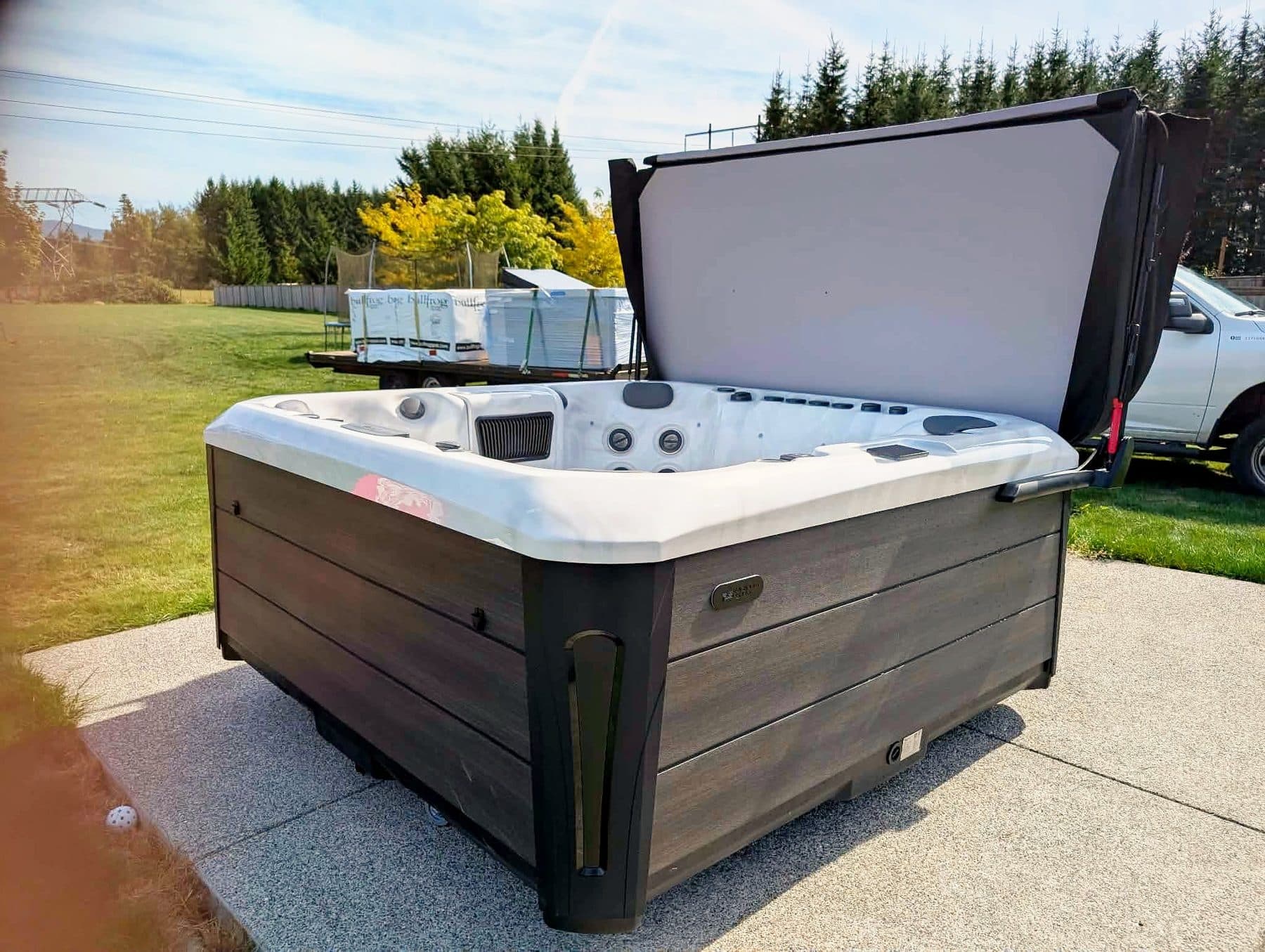
Why people buy a hot tub
Most people buy a hot tub to unwind at the end of the day, ease sore muscles, or simply have a reason to step outside and slow down.
A hot tub also becomes a gathering spot, somewhere friends and family end up on a weekend evening without much planning. For a lot of owners, that social side ends up mattering just as much as the soak itself.
Whatever your reason, it helps to be clear about it before you shop, since it shapes how many seats you need and how much you will actually use the tub.
How a hot tub actually works
Every hot tub runs the same basic water loop. A circulation pump pulls water through a filter, which traps dirt and debris, then through the heater, which brings it back up to temperature.
When you want jets, a separate jet pump pushes water through nozzles in the shell at higher pressure for the massage feel. A control board runs the whole cycle and watches the temperature, turning the heater and pumps on and off as needed.
Understanding this loop makes the rest of ownership much less mysterious. Almost everything an owner does, from rinsing a filter to closing the cover, is really about keeping that loop running cleanly.
The main types to choose from
Power type is the first fork in the road. Plug-and-play models run on a standard 110V household outlet. Larger models need a dedicated 240V circuit from a licensed electrician, similar to the circuit an electric dryer uses.
It also helps to know how a hot tub differs from other backyard water options. A swim spa is longer and built for swimming against a current, not just soaking. A mini pool sits in between, more room to move than a hot tub without the full length of a swim spa.
None of these types is automatically the right answer. It depends on whether you want a soak, a workout, or something in between, and how much space and power you have to work with.
- 110V plug-and-play, simpler setup, standard outlet
- 240V hot tub, more power, needs an electrician
- Swim spa, built for swimming and exercise
- Mini pool, extra room to move, shorter than a swim spa
Choosing the right size and spot
Size your tub around how many people will realistically use it most nights, then measure your pad and the delivery path before you fall in love with a model.
Pick a spot with a flat, solid pad, reasonable access to power, and room to fully open the cover. A spot near the house is usually the most used, simply because it is the easiest to get to.
Think about sun and wind too. A spot with some shade or a windbreak can make a real difference in how often you actually use the tub once it is installed.
What ownership actually involves
Day to day, ownership means rinsing the filter every couple weeks, keeping an eye on water balance, and closing the cover when the tub is not in use.
Over the years, expect a filter replacement now and then, and eventually a new cover once the old one gets heavy and loses its lift. Our service team works on all brands if something needs a closer look.
None of this is heavy work. Most owners spend just a few minutes a week on their tub once they settle into a routine.
How to shop smart
Work through the basics first: seats, power type, where it will sit, and your rough budget. Then visit a showroom and sit in a few models side by side.
Ask about warranty terms in writing, and ask what water care system each model uses. Financing is available through O Bee Credit Union if that helps the math work better for you.
Take your time on this step. A hot tub is something you will use for years, so a little extra research before you buy pays off every time you step outside to use it.
If you want to go deeper on any one piece of this, we have separate guides on the parts inside a hot tub, what to check before you buy, and a look at our smaller and larger models, all linked below.
If you are just starting to look, the best next step is usually a short visit to a showroom with your rough seat count and budget in mind, and a quick measurement of the spot you have in mind at home. From there, the rest of the decisions, brand, exact model, power type, tend to sort themselves out quickly once you can see and sit in the real thing.
Quick answers
Hot Tubs: Nearly Everything You Need to Know: common questions
Short answers from the Tacoma team. Text us if your situation is different.
Keep reading
A hot tub is built for soaking and seating several people. A swim spa is longer and built for swimming against a current, more like a home exercise pool.
It depends on the model. Smaller plug-and-play tubs use a standard 110V outlet, while larger tubs need a dedicated 240V circuit installed by a licensed electrician.
Routine care is light: rinsing the filter every couple weeks and keeping an eye on water balance. Bigger items like a filter or cover replacement come up only every so often.
Start with how many people will use it and your power options, then visit a showroom to sit in a few models before deciding on size and features.