
Owner guide
The Parts of a Hot Tub, Explained
A hot tub is a handful of simple parts working together. Once you know what each one does, troubleshooting gets a lot less scary.
By the Black Pine team, Tacoma · Updated October 2026 · 5 min read
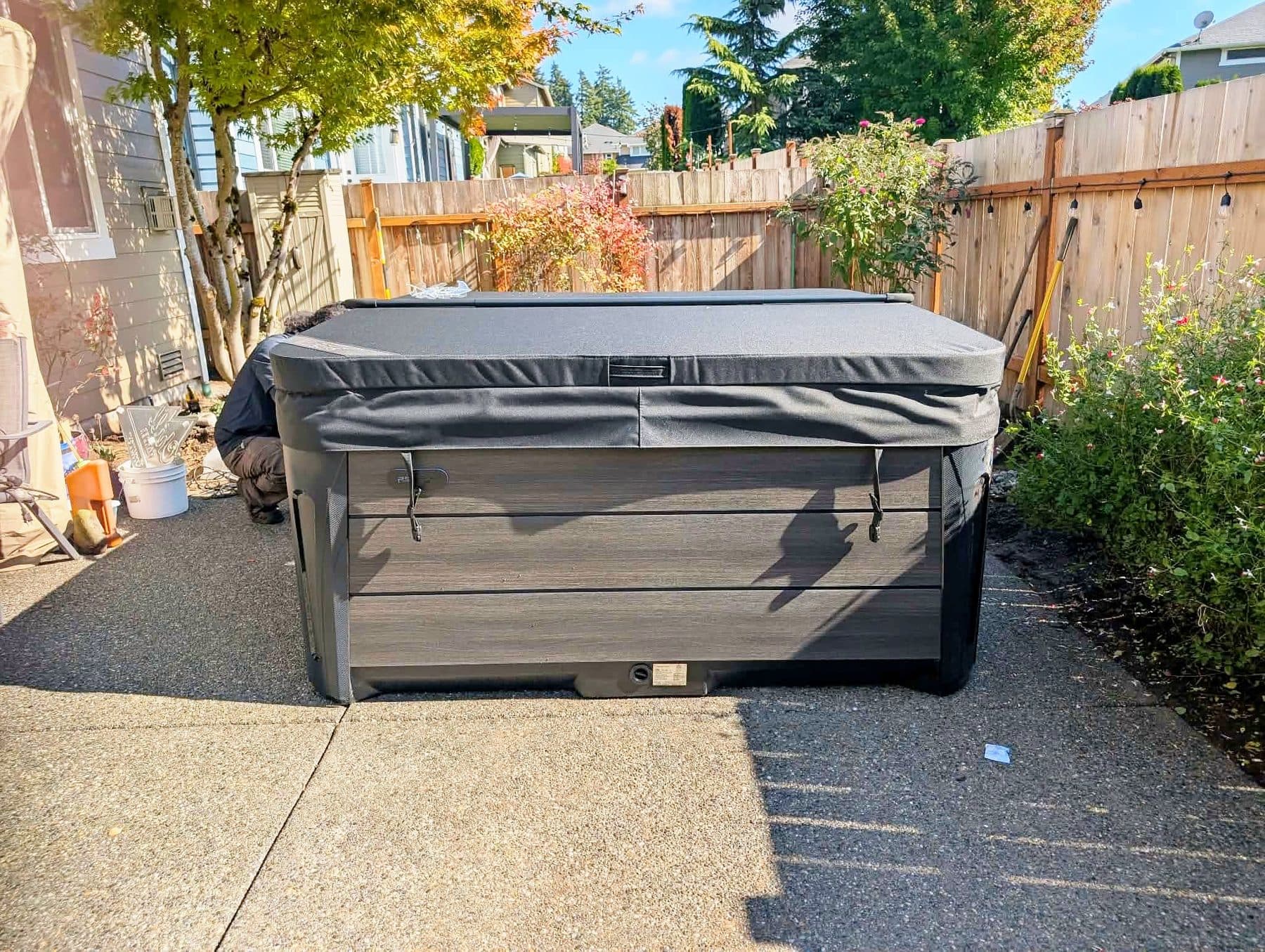
The shell and the cabinet
The shell is the molded tub you sit in. It holds the water and the seats. Most shells are acrylic, a tough plastic that resists stains and holds its shape for years.
Under the acrylic surface is a layer of fiberglass and resin that gives the shell its strength. That backing is what keeps the shell rigid once it is full of water and people.
The cabinet is the outer skin around the shell. It hides the plumbing, the pumps and the wiring underneath. Cabinets are usually a wood-look synthetic panel that will not rot like real wood.
Under the cabinet sits the frame, a skeleton of beams that the shell rests on. The frame carries the full weight of the water, the shell and everyone sitting in it, so it needs a flat, solid pad underneath to do its job.
Pumps, heater and the control board
Most tubs have two kinds of pumps. The circulation pump runs quietly all day, pushing water through the filter and heater. The jet pumps turn on only when you want strong jet pressure.
Running the circulation pump around the clock keeps the water moving through the filter, which is what keeps it clear between cleanings. It is a low-power motor built to run for long stretches without strain.
Jet pumps are stronger and louder, built for short bursts rather than all-day use. A tub with more jet pumps can run more jet zones at full strength at the same time.
The heater is a simple element that warms water as it passes through, the same idea as a kettle. It works with the circulation pump to hold your set temperature, cycling on and off as needed.
The spa pack, also called the control board, is the brain. It reads the temperature sensor, runs the pumps and heater on schedule, and protects the tub if something goes wrong, such as low water or an overheating sensor.
What you see and touch
The topside control is the panel you press to change temperature, turn on jets or start lights. It talks to the spa pack inside the cabinet over a short cable.
Filters are cartridges that trap dirt and debris before water reaches the heater and jets. A clean filter protects every part downstream of it, which is why it gets the most attention from owners.
Jets are the nozzles in the shell wall that mix air and water for the massage feel. Some jets stay fixed in place, while others can rotate or be adjusted by hand.
Many tubs add an ozone or UV system, a quiet sanitizer that helps reduce the chemicals you need to add by hand. It works alongside your regular water care routine, not instead of it.
The blower, the cover and the plumbing
A blower pushes air through small jets to create a bubbling, champagne-style effect, separate from the water jets. It warms the air slightly before pushing it through, so it does not cool the water.
The cover is foam inside a vinyl shell. It holds in heat and keeps debris and rain out of the water when the tub is not in use. A good cover is one of the simplest ways to keep running costs down.
Plumbing is the network of pipes and fittings connecting the shell, pumps, heater and filter. It is sealed, but unions and o-rings can loosen over the years, which is usually what causes a slow leak.
What wears out, what to check, when to call service
Filters are the part you handle most. Rinse them every couple weeks and replace them once they look worn or stop rinsing clean, usually once or twice a year depending on use.
Covers lose their lift over several years as the foam inside soaks up moisture. A heavy, waterlogged cover is a sign it is due for replacement, and a worn cover also lets more heat escape, pushing your running cost up.
Jets, pumps and the spa pack rarely need attention from an owner. If you see an error code, hear a pump running oddly, or notice the water will not heat, that is the time to call a service tech instead of guessing or taking the cabinet apart yourself.
- Check and rinse filters every 2 weeks
- Watch for a cover that feels heavy or waterlogged
- Wipe the shell line to slow waterline buildup
- Error codes, no heat, or a loud pump mean call service
- Never open the cabinet or spa pack yourself
Quick answers
The Parts of a Hot Tub, Explained: common questions
Short answers from the Tacoma team. Text us if your situation is different.
Keep reading
The filter. It is the one part meant to be pulled, rinsed and eventually replaced by the owner.
The circulation pump runs continuously to filter and heat the water. The jet pumps only switch on when you choose strong jet pressure.
No. Those parts carry power and water together, so any repair should go to a trained service technician.
If it feels noticeably heavier than when it was new, or it no longer holds its shape, the foam inside has likely soaked up water and it is time for a new one.